
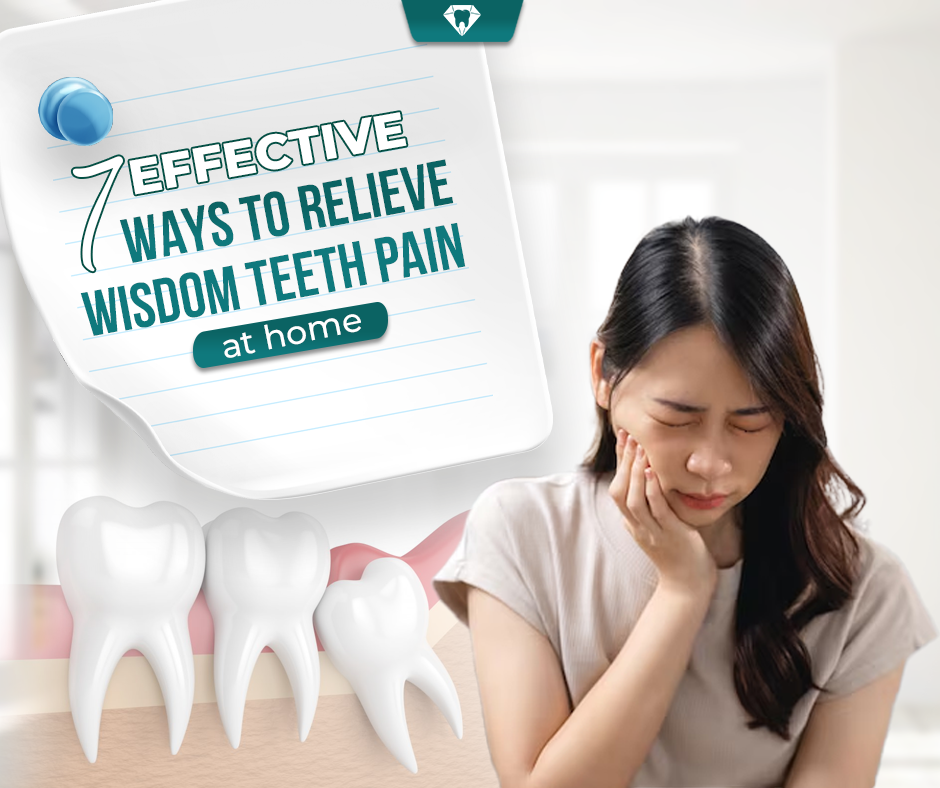
Wisdom tooth pain, often described as a nagging, dull, and throbbing ache, is a source of considerable discomfort for many individuals. The question of how to to relieve wisdom teeth pain is a common concern. If you’re currently experiencing the torment of wisdom tooth pain, this article is for you. International Joy Dental Clinic will guide you through 7 effective home remedies to relieve wisdom tooth pain.
Content of table
Toggle1. Causes of Wisdom Tooth Pain

Wisdom teeth, also known as third molars or teeth number 8, are the last teeth to erupt in the oral cavity. They typically emerge between the ages of 17 and 25. Due to their late arrival, there is often insufficient space in the jaw, leading to impaction, misalignment, and gum inflammation. The pain associated with wisdom tooth eruption can stem from several factors:
- Limited Space: By the time wisdom teeth attempt to emerge, the jawbone has typically reached its mature size, leaving little room for these additional teeth. Consequently, wisdom teeth may become crowded, exerting pressure on adjacent teeth, gums, and the jawbone, resulting in prolonged discomfort.
- Impaction and Misalignment: The lack of space often prevents wisdom teeth from erupting straight, like other teeth. Instead, they may become impacted, growing at an angle or horizontally, pushing against neighboring teeth. This can cause significant pain and potentially damage or decay the second molars (teeth number 7).
- Gum Inflammation: As wisdom teeth push through the gum tissue, the surrounding area becomes inflamed and swollen. This inflammation causes pain and creates an environment conducive to bacterial growth, increasing the risk of infection.
2. 7 Home Remedies for Wisdom Tooth Pain Relief
2.1 Cold Compress:

Applying a cold compress is a safe, affordable, and effective method for reducing swelling and pain. This technique can also be used to alleviate wisdom tooth discomfort.
Instructions:
- Prepare an ice pack or wrap ice cubes in a clean cloth.
- Apply the ice pack to the cheek area corresponding to the location of the painful tooth.
- Hold the compress in place and gently massage the area for 15 to 20 minutes, followed by a 10-minute break. Repeat this process.
- Apply the cold compress 2-3 times daily to reduce swelling and pain.
2.2 Saltwater Rinse:

Saltwater has long been recognized for its natural antibacterial properties. It’s a readily available household ingredient that can effectively cleanse the oral cavity and reduce inflammation. During the rinsing process, avoid swallowing the saltwater to prevent digestive issues.
Instructions:
- Dissolve 1 teaspoon of salt in a glass of warm water.
- Stir until the salt is completely dissolved.
- Swish the saltwater in your mouth for 30 seconds, focusing on the affected area.
- Spit out the saltwater and repeat 2-3 times daily for pain relief.
2.3 Use cajeput essential oil to relieve wisdom teeth pain

Tea tree oil possesses potent antibacterial and anti-inflammatory properties, making it effective for soothing wisdom tooth pain. However, avoid applying undiluted tea tree oil directly to the gums, as it can cause irritation.
Instructions:
- Dilute a few drops of tea tree oil in warm water.
- Dip a cotton swab in the diluted solution and gently apply it to the affected gum area.
- Leave it on for 5-10 minutes, then rinse your mouth with clean water.
2.4 Fresh Lemon:

The acidic properties of lemon can help disinfect the oral cavity and alleviate wisdom tooth pain. However, if you have sensitive teeth, dilute the lemon juice before use.
Instructions:
- Cut a thin slice of lemon.
- Place the lemon slice directly on the painful tooth for 2-3 minutes.
- Alternatively, squeeze lemon juice onto a cotton swab and apply it to the swollen area.
- After 1-2 minutes, rinse your mouth with clean water.
2.5 Turmeric:

Turmeric is a traditional remedy for natural and rapid pain relief.
Instructions:
- Mix a small amount of turmeric powder with warm water to form a paste.
- Apply the paste directly to the affected gum area.
- Leave it on for a few minutes, then rinse your mouth with warm water.
2.6 Peppermint:

Peppermint not only provides pain relief but also freshens breath. You can use fresh peppermint leaves or peppermint essential oil.
Instructions:
- Wash a few fresh peppermint leaves.
- Chew the leaves gently to release their essence and allow it to come into contact with the affected area.
- Alternatively, brew peppermint tea, let it cool, and use it as a mouthwash 2-3 times daily.
2.7 Over-the-Counter Pain Relievers:
If the pain is severe and home remedies are ineffective, you can use over-the-counter pain relievers such as Paracetamol or Ibuprofen. However, adhere to the recommended dosage and avoid overuse to prevent side effects. If the pain persists or is accompanied by signs of infection, consult a dentist for proper evaluation and treatment.
3. Precautions During Wisdom Tooth Eruption
- Maintain good oral hygiene by brushing your teeth twice daily and using dental floss to remove food debris.
- Avoid hard, hot, or spicy foods that can irritate the swollen gums.
- Do not attempt to extract the wisdom tooth at home. If the pain is persistent, consult a dentist for appropriate treatment.
Conclusion
International Joy Dental Clinic has provided 7 safe and effective home remedies for wisdom tooth pain relief. These remedies can help alleviate discomfort temporarily. However, they are not a substitute for professional dental care. It is essential to consult a dentist for proper diagnosis and treatment.